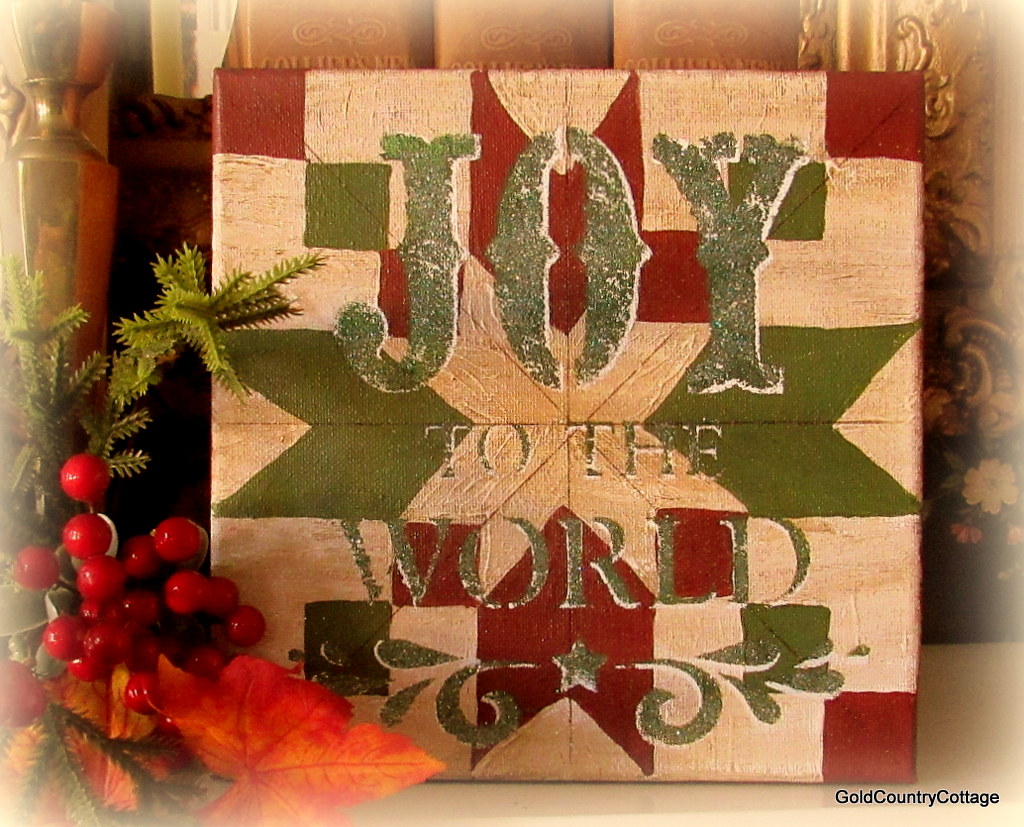
The colors of Christmas are colors of warmth and nature
- red and green -
often accented by or grounded in white, the color of peace and light.
Rooms decorated in the colors of Christmas
resonate with energy and sparkle
and they all perpetuate the spirit of welcome.
Disclaimer:
This fact is only true if you live in a Hallmark movie,
which it sometimes seems that I do.
In reality,
Christmas is wonderfully warm
and welcoming in any color.


In 1500 elaborate sweet-cake molds were being carved from wood.
In Germany the idea was taken a bit further and Black Forest wood carvers
created cookie molds in the shapes of people and animals
and embellished them with intricate designs.
Throughout the 17th and 18th centuries,
cookies made of gingerbread expressed greetings and affection
and were a part of the celebration of Christmas.
By the end of the 19th century cookie cutters were becoming mass produced
and aluminum ware began in 1913.
The earliest aluminum cutters made have wooden handles of red or green.

Pretty as well as practical,
table linens known as "layovers" were used in the Victorian times
to protect furniture from airborne dust.

Queen Victoria and Prince Albert first
popularized the Christmas tree
as part of the royal family's yuletide
celebration in the 1840's.
Despite many attempts
by early conservationists,
including President Teddy Roosevelt,
who banned Christmas trees
from the White House in 1901,
the Christmas tree, over time,
became the symbol of the season.

Electric tree lights were first used in 1812.
They were prohibitively expensive,
costing the equivalent of $1,000 today,
so until the early 1900's
candles provided that Christmas glow.
A damp sponge,
tied to the end of a long stick,
was kept handy to put out any blaze.

Up until about 1900,
only one in five families
had a Christmas tree of their own.
Instead, an evergreen was set up
in the schoolhouse, church, or town hall
for everyone to decorate and enjoy.

Long before the first Christmas Day boughs of holly
were brought indoors
to mark December's celebrations
and holly branches were exchanged
by friends as tokens of goodwill.
When the Romans introduced their
December traditions
to the Northern peoples,
they found that beliefs
in the powers of holly
were already long established.
Holly was brought into the dwellings to
provide winter refuge for friendly spirits.
In Ireland, good fairies were
thought to reside in holly.
Throughout the Old World,
belief in the protective power
of holly in winter was wide spread.
The red of its berries
was thought to ward off evil
and the holly boughs
to defend a house against witchcraft.

As for the inhabitants of this Cottage,
all we need is a good spot
in front of the fire
to ward off anything
that may be lurking in the shadows.
I imagine the presence of
those little Irish fairies
in the 100 year old holly trees in the garden
don't hurt either.

I had picked this candle holder up
at a yard sale quite some time ago.
I just saw something on Pinterest
that sparked my imagination
so I hauled it out of hibernation
and here you have it.

I hope you enjoyed learning
some of the hard facts about Christmas.
Mostly they came from Country Living's Holidays magazine, 1992 edition.
Just one of the many Christmas magazines I have hoarded over the years,
a figment of my imagination, more or less.
I hope you found something out
that will make your holidays
just a little happier.

The quest continues
for the perfect Christmas...
don't think I am not hard at work
to make it happen
and am hoping to show you soon.
Until then...


...xxoJudy...

Happy and blessed Thanksgiving.
Sharing today with:
IMPORTANT NOTIFICATION:
The day after I typed up this post, my computer left this world never to be seen again. I am struggling to master this new machine known as a laptop. I can only hope to master it before the Christmas holidays are over and done. I probably will miss another dead line as I can't confer with the professionals until next Thursday. Wish me luck!